
WELCOME BONUS 300%
UP TO €2000 + 100
FREE SPINS
UP TO €2000 + 100
FREE SPINS
Home → Blackjack
Blackjack at Joe Fortune: Variants, Rules and Payouts
What a Natural Blackjack Practically Pays Out
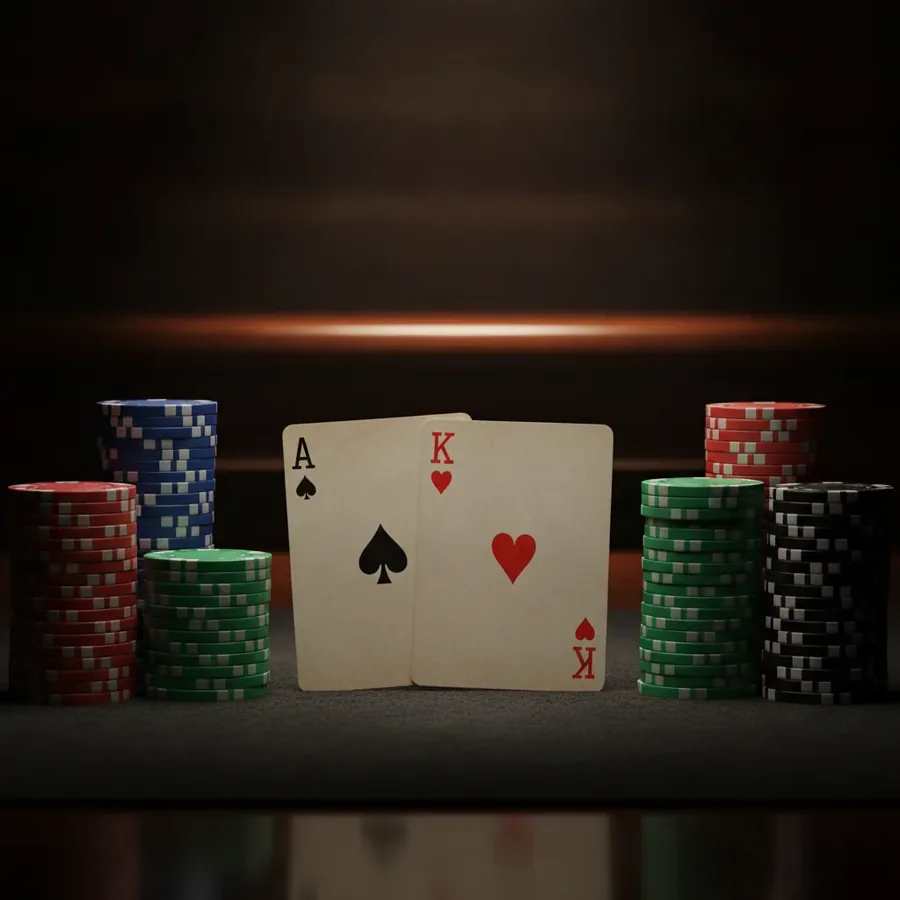
The standard payout for a natural blackjack is 3:2, which yields 150 EUR on a 100 EUR wager. This ratio stands in sharp contrast to the 6:5 variant that reduces the return to 120 EUR on the same stake. The difference of 30 EUR per hand directly impacts long-term bankroll preservation.
The Liberal Vegas Strip game maintains this favorable 3:2 structure with a house edge of only 0.28%. In comparison, the single-deck classic version offers an even lower house edge of 0.15% while keeping the 3:2 payout. These figures represent the most efficient mathematical conditions available at the tables.
A player betting 100 EUR receives 150 EUR total when hitting a natural with the 3:2 rule. Switching to the 6:5 rule would result in a 120 EUR payout, effectively increasing the casino advantage by 1.39 percentage points. This structural change is more detrimental than any other rule modification listed.
Infinite Blackjack vs Classic Seven-Seat Table
Infinite Blackjack hosted by Evolution allows unlimited players at the table with bets ranging from 1 to 5,000 EUR. This capacity contrasts with the fixed seven-seat limit found on traditional physical or classic digital tables. The high maximum bet accommodates high-roller strategies without seat contention.
The RTP for Infinite Blackjack is recorded at 99.47%, which is slightly lower than the 99.56% RTP of Lightning Blackjack. Both games offer multipliers or side bets, yet Infinite Blackjack focuses on volume rather than volatile multipliers up to 25x. Players seeking steady returns may prefer the infinite model over the lightning variant.
Lightning Blackjack introduces random multipliers up to 25x on winning hands for wagers between 1 and 2,500 EUR. This feature adds volatility compared to the standard Infinite table which lacks such multipliers. The choice depends on whether the player prioritizes consistent 99.47% returns or chance-based large payouts.
Step-by-step Split at the Live Table
The DAS rule permits doubling after a split, which improves the RTP by approximately 0.14 percentage points. This rule applies to all cards resulting from a split, not just the initial two. It significantly enhances the strategic value of splitting pairs compared to DOA variants.
Resplitting Aces (RSA) further optimizes the game math by reducing the house edge by 0.08 percentage points. Most casinos restrict ace splits to one card, but Liberal Vegas Strip allows re-splitting. This rule provides additional opportunities to capitalize on favorable dealer up-cards.
The combination of DAS and RSA creates the Günstigste Regelkombination for serious blackjack players. These rules work alongside S17 and Late Surrender to achieve the lowest possible house edge of 0.28%. Understanding these mechanics is essential for maximizing the theoretical return on investment.
Blackjack doesn't count for every bonus offer
Tischspiele contribute only 10% toward the wagering requirement for the 300% welcome bonus up to 2,000 EUR. This low contribution rate means that playing blackjack requires ten times more turnover than slots to clear the bonus. A 2,000 EUR bonus thus demands 20,000 EUR in blackjack bets versus 2,000 EUR in slots.
The 100 free spins attached to the bonus are typically restricted to specific slot titles with 100% contribution. Slots allow faster clearance of the wagering obligation due to their full counting status. Mixing blackjack into the play schedule drastically extends the time needed to unlock withdrawable funds.
Players ignoring the 10% table contribution often fail to meet the turnover within the validity period. The 300% match up to 2,000 EUR becomes difficult to convert if heavy blackjack play is maintained. Strategic players should focus primarily on slots to satisfy the bonus terms efficiently.
Latency under 2 seconds at the live table
Live dealer streams require low latency to ensure real-time interaction with the croupier and other players. Delays beyond this threshold can disrupt the flow of decision-making during rapid play sessions.
Infinite Blackjack supports up to five thousand EUR bets with no wait times for empty seats. This eliminates the latency associated with finding an open spot at a classic seven-seat table. The seamless entry allows players to join high-stakes action immediately without queueing.
Side bets like Any Pair and 21+3 are integrated into the main game stream without significant delay. These features add complexity to the betting phase but maintain the fast pace required by modern players. Consistent low latency ensures that the 99.47% RTP remains theoretically achievable through timely decisions.
Blackjack variants at a glance
| Variant | Payout | House edge | Rule | Bet range |
|---|---|---|---|---|
| Blackjack 6 Decks, S17, DAS, DOA, Auszahlung 3:2, Basisstrategie | 99.54% | 0.46% | Dealer steht auf Soft 17; Verdopplung auf jeder Zweierkarte; Verdopplung nach Split erlaubt; keine Aufgabe. Basisstrategie ist für diesen Wert zwingend | Blackjack 3:2, normaler Gewinn 1:1, Insurance 2:1 |
| Blackjack Insurance / Versicherung (6–8 Decks) | 92.53% | 7.47% | Separate Nebenwette bis 50% der Hauptwette, wenn der Dealer ein Ass hat. Basisstrategie schreibt IMMER Ablehnung vor (außer Karten zählen bei True Count ≥ +3). Bei einem Deck Vorteil ≈ 5.88% | Insurance 2:1 |
| Blackjack Split / Double / H17 – Regel-Effekte | n.a. (Regel-Modifikatoren) | H17 +0.22 Prozentpunkte; RSA −0.08 Prozentpunkte; DAS −0.14 Prozentpunkte | Dealer Hits Soft 17 verschlechtert RTP um 0.22 Prozentpunkte; Resplit Aces verbessert um 0.08 Prozentpunkte; Double After Split verbessert um ca. 0.14 Prozentpunkte; 6 Decks statt 8 – ca. 0.02 Prozentpunkte. | Double – Einsatz ×2 mit einer Karte; Split – bis 4 Hände; Ass-Split meist mit einer Karte. |
| Blackjack Surrender (Late Surrender) – Regel-Effekt | n.a. (Regel-Modifikator) | −0.08 Prozentpunkte | Spieler gibt Hand nach Dealer-Blackjack-Prüfung auf, verliert die Hälfte des Einsatzes. Verbessert RTP um ca. 0.08 Prozentpunkte. Early Surrender ist wesentlich wertvoller (bis −0.6 Prozentpunkte), aber extrem selten. | Rückzahlung 50% des Einsatzes |
| Blackjack Ein Deck, klassische Regeln, 3:2 | 99.85% | 0.15% | Weniger Decks = niedrigerer Vorteil; ein Deck gibt ca. −0.48 Prozentpunkte gegenüber 8 Decks. Oft durch 6:5 Auszahlung kompensiert. | Blackjack 3:2, Gewinn 1:1 |
| Blackjack Auszahlung 6:5 statt 3:2 (6 Decks) | 98.15% | 1.85% | Ersatz von 3:2 durch 6:5 fügt exakt +1.39 Prozentpunkte zum Vorteil des Casinos hinzu – stärker als jede andere Regeländerung. Bei $10 Einsatz zahlt Blackjack $12 statt $15. | Blackjack 6:5, Gewinn 1:1 |
One Deck vs Eight Decks in House Edge
Blackjack Ein Deck offers a house edge of 0.15 percent with an RTP of 99.85 percent when using classical rules and paying 3:2 for natural hands. This configuration provides approximately minus 0.48 percentage points advantage compared to playing with eight decks, assuming all other variables remain constant across the game variants. Players seeking the lowest possible house edge should prioritize single-deck games, as fewer cards significantly reduce the statistical advantage held by the casino over time.
Standard eight-deck shoes typically increase the house edge by roughly 0.48 percentage points relative to single-deck versions, bringing the theoretical return down from 99.85 percent to lower levels unless compensated by favorable rules. The Blackjack Liberal Vegas Strip variant uses liberal rules to achieve a 0.28 percent house edge despite using multiple decks, demonstrating how rule adjustments can offset deck count disadvantages effectively for the player base.
The impact of deck count becomes critical when combined with payout structures, as six-deck games often pay only 6:5 instead of 3:2, adding exactly 1.39 percentage points to the house advantage. This specific penalty is stronger than any other single rule change available at online tables, making the choice between three-deck and six-deck formats financially significant for long-term bankroll management strategies.
Shoe, Cut Card, and 75 Percent Penetration
Live blackjack tables like Infinite Blackjack operate with unlimited seats and utilize standard shoe procedures that determine the penetration depth before the cut card triggers a shuffle. Evolution supplies these live dealer environments where minimum bets start at one euro and maximum limits reach five thousand euros per hand during active play sessions. Understanding penetration helps players estimate how many rounds occur before reshuffling, which impacts side bet opportunities and overall game pace significantly.
Lightning Blackjack from Evolution allows unlimited players to join tables where lightning multipliers up to twenty-five times apply to winning hands after each deal. The minimum stake here begins at one euro while capping at two thousand five hundred euros, creating a different risk profile compared to standard infinite tables. These multiplier events introduce volatility that alters the expected value calculations for every single hand dealt throughout the live session duration.
Casual players might prefer Blackjack Party, which features two moderators creating a party atmosphere while maintaining standard betting ranges from one euro to one thousand euros. The presence of moderators does not change the underlying mathematical expectations but affects the perceived speed and social interaction during the dealing process. Each table type requires distinct strategic adjustments based on its specific payout structures and side bet availability options offered by the provider.
Which rule variants does the software show?
The software displays Blackjack Split and Double mechanics alongside Hit Soft Seventeen rules that add 0.22 percentage points to the house edge compared to standing on soft seventeen. Resplitting Aces improves the player position by 0.08 percentage points while doubling after split enhances returns by approximately 0.14 percentage points against the dealer's stiff hands. These modifiers accumulate to create distinct variance profiles depending on which specific combination of rules appears on the digital table interface.
Six-deck games utilizing Stand on Soft Seventeen, Dealer Stands on All Seventeen, and Double After Split rules yield a house edge of 0.46 percent with an RTP of 99.54 percent. Late surrender reduces this edge by 0.08 percentage points, allowing players to forfeit half their bet after checking for dealer blackjack. Base strategy remains mandatory for this specific rule set to achieve the stated theoretical return percentages accurately over large sample sizes.
Insurance bets offer a separate wager paying two to one when the dealer shows an ace, carrying a steep house edge of 7.47 percent for six to eight deck games. Basic strategy dictates always rejecting this side bet unless counting cards reveals a true count greater than or equal to positive three points. This negative expectation makes insurance a costly mistake for most players who fail to track the remaining deck composition accurately.
How long does a Live Blackjack round take?
Infinite Blackjack from Evolution accommodates unlimited participants at tables where minimum stakes begin at one euro and maximum wagers reach five thousand euros per decision point. Four side bets including Any Pair, Twenty-One Plus Three, Hot Three, and Bust It provide additional betting avenues alongside the main game action during each round. The rapid dealing speed inherent in infinite formats minimizes downtime between hands compared to traditional physical table experiences found in land-based venues.
Lightning Blackjack maintains similar participation limits with bets ranging from one euro to two thousand five hundred euros while introducing random multipliers up to twenty-five times. These multipliers activate on winning hands without altering the base game speed, ensuring that round duration remains consistent with standard live dealer protocols established by Evolution studios. Players must react quickly to multiplier notifications which appear instantly after the initial deal concludes successfully.
Blackjack Party offers a slower-paced environment hosted by two moderators who guide the flow of conversation and gameplay through themed entertainment segments. Betting limits range from one euro to one thousand euros, providing a middle ground between high-limit infinite tables and casual play options. The moderator interactions extend the average time per round slightly due to commentary breaks inserted between successive dealing cycles.
What Peek Means with a Dealer Ace
Late surrender allows players to forfeit half their bet after the dealer checks for blackjack, improving the house edge by approximately 0.08 percentage points in eligible games. Early surrender, which permits giving up before the dealer peeks, is much more valuable at minus 0.6 percentage points but remains extremely rare in modern online casinos. This distinction highlights why finding late surrender options is crucial for optimizing basic strategy decisions against strong dealer upcards.
When the dealer shows an ace, players face the risk of losing their entire stake if the dealer possesses a ten-value card underneath, prompting the peek procedure. Insurance bets resolve immediately upon this peek occurring, paying two to one if the hole card completes a dealer blackjack sequence for the house. Accepting insurance incorrectly increases the overall house edge significantly, reducing long-term profitability for unsuspecting participants at the table.
The payout structure differs fundamentally between standard wins paying one to one and blackjacks paying either three to two or the inferior six to five ratio. A six-to-five payout on a ten-euro bet yields twelve euros instead of fifteen, directly impacting the total return calculated over thousands of hands played. This discrepancy explains why six-deck games with six-to-five payouts carry substantially higher house edges than their three-to-two counterparts.
Error insurance: 7 percent additional house edge
Blackjack Insurance offers a separate side bet paying 2:1 when the dealer shows an Ace, but this wager carries a steep 7.47% house edge for six to eight decks. This disadvantage stands in sharp contrast to the primary game's low risk, where standard tables maintain a house edge of just 0.28%. Players following basic strategy must always reject this option unless counting cards with a true count of +3 or higher. Deviating from this rule results in significantly lower long-term returns.
The theoretical return to player (RTP) for Insurance is only 92.53%, which is far below acceptable standards for any blackjack variant. For context, the main game on a Liberal Vegas Strip table yields an RTP of 99.72%, preserving player capital much more effectively. Accepting the insurance bet essentially surrenders value that would otherwise remain in the betting pool over thousands of hands. This mathematical reality makes the side bet an unattractive proposition for disciplined players.
A single-deck variation slightly improves the insurance odds to a 5.88% house edge, yet it remains a negative expectation wager overall. The cost of accepting insurance on every qualifying hand can erode bankrolls faster than any other common mistake at the table. Players should strictly adhere to basic strategy charts that prohibit taking insurance under normal conditions. Only advanced card counters with sufficient deck penetration and positive counts should consider this exception.
Place Side Bet before cards are dealt
Live Infinite Blackjack allows players to place up to four distinct side bets including Any Pair, 21+3, Hot 3, and Bust It before the initial deal. These wagers operate independently of the main game outcome, offering payouts based on specific card combinations rather than winning the hand. The minimum stake for these tables ranges from one to five thousand euros, accommodating high-volume action without limiting participation. Each side bet carries its own unique probability structure and payout schedule defined by Evolution Gaming.
Lightning Blackjack introduces a different side mechanism with Lightning Multipliers reaching up to 25x on winning hands, available within a one to two thousand five hundred euro limit. Unlike static side bets, these multipliers apply randomly to specific cards dealt during the round, adding volatility to the standard gameplay. The base RTP for this title sits at 99.56%, providing a relatively fair environment despite the random multiplier events. Players must decide whether to engage with these enhanced payout opportunities before the dealer distributes the cards.
Blackjack Party features a party atmosphere moderated by two hosts, maintaining entry limits between one and one thousand euros for all participants. While the entertainment value differs from silent live studios, the underlying mathematics of the side bets remain consistent with industry standards. The presence of moderators does not alter the house edge or the timing requirements for placing wagers. Bettors must ensure their side bets are confirmed before the dealing sequence begins to avoid disqualification.
When does the table max bet apply?
This flexibility supports high-roller strategies that require large exposure to variance without arbitrary restrictions from the platform. Players should verify real-time limits as they may change based on bankroll management policies.
Lightning Blackjack restricts individual hand stakes to a maximum of two thousand five hundred euros, capping potential single-round losses significantly lower than infinite variants. This limit ensures that the random lightning multipliers do not expose the operator to excessive liability during high-variance rounds. Blackjack Party enforces an even stricter ceiling of one thousand euros, catering to a more casual or mid-stakes audience. These caps define the upper boundary of financial risk per transaction regardless of the player's total balance.
Bonus wagering requirements impose implicit betting limits because table games contribute only ten percent toward the three hundred percent welcome bonus turnover. Wagering two thousand euros on a blackjack table counts as only two hundred euros toward the required turnover, making high-limit play inefficient for clearing bonuses. Slots contribute one hundred percent, meaning the same two thousand euros in slot play fully satisfies the turnover obligation. Players prioritizing bonus clearance should avoid high-limit blackjack tables entirely to optimize their progress.
Double Down after Split: which tables allow it
Liberal Vegas Strip blackjack permits Double After Split (DAS), a rule that reduces the house edge by approximately 0.14 percentage points compared to restrictive variants. This allowance enables players to double their initial wager on any hand created from a split, maximizing profit potential on strong starting pairs. The combination of S17, DAS, Resplit Aces, and Late Surrender creates the most favorable mathematical environment available. Without DAS, the advantage shifts back toward the casino by a measurable margin.
Six Deck S17 blackjack explicitly allows Double After Split alongside doubling on any two cards and resplitting aces, contributing to its 0.46% house edge. This liberal rule set matches the sophistication of the Liberal Vegas Strip version, ensuring comparable long-term returns for optimal players. The ability to double down after splitting increases the frequency of high-expectation situations where the player holds a significant statistical advantage. Restricting DAS would immediately degrade the game's appeal and profitability for skilled participants.
Insurance rules and general doubling restrictions often intersect, but DAS specifically applies to the main hand interaction after a pair is divided. Tables lacking DAS force players to hit or stand on doubled hands, reducing strategic flexibility and increasing the house edge. The 0.14 percentage point benefit of DAS is substantial when compounding over thousands of hands played at high volume. Players seeking optimal conditions must verify this rule exists before committing funds to any given table variant.
Live stream with three cameras and OCR
Evolution Gaming powers both Infinite and Lightning Blackjack streams, utilizing professional studio setups that typically employ multiple camera angles for transparency. Optical Character Recognition (OCR) technology instantly translates physical card values into digital interface data, ensuring accurate bet placement and result verification. This automation eliminates human error in reading cards and calculating payouts, maintaining strict integrity across all live sessions. The integration of OCR allows for seamless interaction between physical dealers and online player interfaces.
Blackjack Party also relies on Evolution's infrastructure, featuring two moderators who manage the flow while OCR handles the technical card recognition. The stream quality and camera coverage ensure that every card dealt is visible and verifiable by the participant in real time. This technological layer provides assurance that the random number generation associated with side bets and multipliers operates fairly. Players can trust that the digital representation matches the physical reality on the felt.
The use of OCR and multi-camera feeds does not alter the underlying RTP or house edge, which remain fixed at 99.47% and 99.56% respectively. These technical features serve purely to enhance security and user experience without affecting the mathematical outcomes of the games. Live tables differ from RNG versions only in pacing and social interaction, not in statistical advantage. The consistency of these parameters across all live variants confirms the reliability of the gaming environment.
Contact
Live - online chat
Banking









Providers












Joe Fortune Casino 2026